

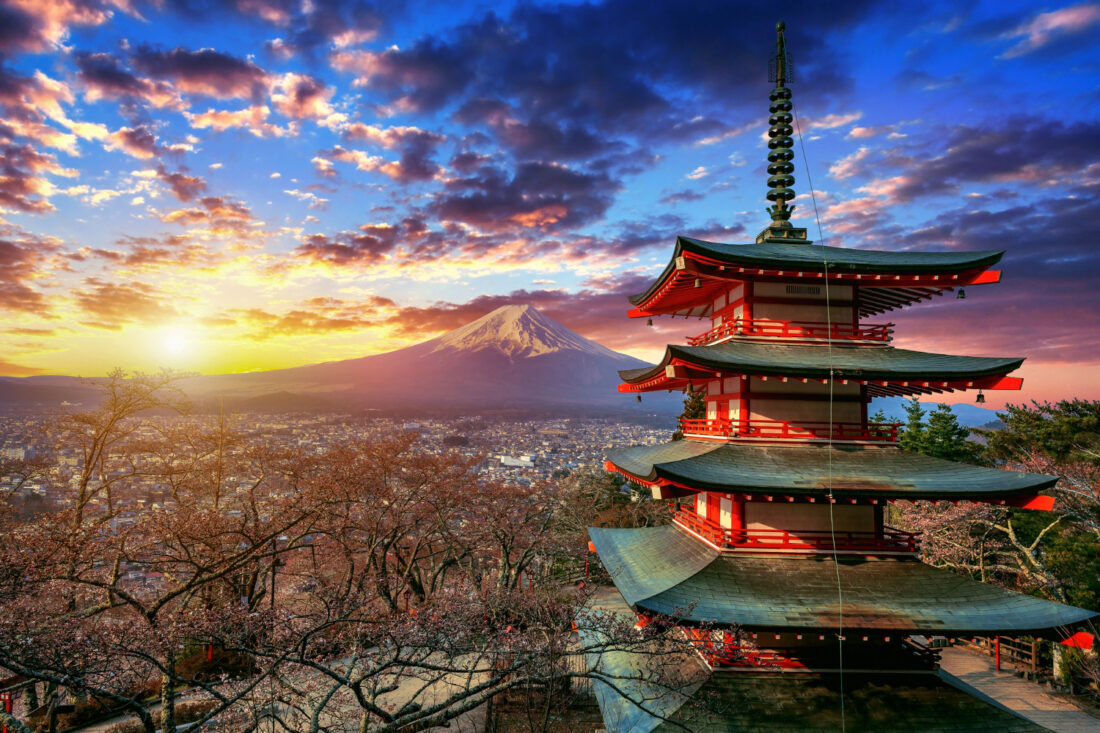
Your first trip to Japan can feel like stepping into several worlds at once. Neon-lit streets hum with late-night ramen shops, yet only a train ride away, quiet temple gardens echo with the sound of water over stone.
For newcomers, that range can be as surprising as it is rewarding. The more you know before you go—about the pace, the customs, and even how the weather shifts from one island to the next—the easier it is to make the most of every stop.
We talked with avid traveler and Japanese cooking show host Ryan McCorvie to get his advice on how first-time travelers to Japan can make the most of their adventure.
Getting the Timing Right: Seasons and Festivals
Japan’s appeal changes with the seasons, and timing your trip can shape your entire experience. The country welcomed a record 36.9 million international visitors in 2024, a 47 percent increase from the year before, and many of them planned their travel around peak seasonal highlights. Cherry blossom season, or sakura, typically peaks between late March and early April in major cities like Tokyo and Kyoto.
“While it’s a remarkable sight, it also brings dense crowds and higher prices,” notes McCorvie. “If you’d prefer fewer people, consider going for the autumn foliage season in November. You’ll enjoy stunning red and gold landscapes with fewer tourists, especially in regions like Nikko or the Japanese Alps.”
Spring and autumn aren’t the only times worth considering. A July trip drops you into summer festival season, from Kyoto’s Gion Matsuri to fireworks displays along riverbanks. Winter in Hokkaido means soft powder snow and the Sapporo Snow Festival’s huge ice sculptures, while January visits to rural shrines bring a quieter, more local energy.
Japan’s geography complicates the weather story. You might leave snowy Sapporo in the morning and arrive in Osaka to sunshine in the afternoon. Okinawa stays warm into November, making it one of the few places you can swim while the mainland is cooling off. Planning around these variations helps you pack more efficiently and decide whether to bring a down coat or a swimsuit.
For travelers drawn to tradition, checking local festival calendars before booking flights is worthwhile. The Takayama Autumn Festival’s ornate floats or Aomori’s Nebuta Festival, where enormous lantern figures parade through the streets, can make a trip feel even more connected to the place.
Navigating Japan Like a Local
Rail travel is woven into daily life in Japan in a way few countries can match. In 2021, 28 percent of all passenger-kilometers traveled in Japan were by rail, compared to just 0.25 percent in the United States and 5 percent in the United Kingdom. That reliance on trains shapes not only how people move, but also the expectations for punctuality, order, and efficiency that visitors quickly notice.
The first time you step into Tokyo Station, the size and order can be intimidating. Overhead signs stretch across sprawling concourses, guiding you toward platforms where trains arrive within seconds of their scheduled time. Long-distance travel is often easiest with the Japan Rail Pass, which covers most JR trains including the Shinkansen bullet trains. A round trip between Tokyo and Hiroshima alone can offset much of the pass’s cost, particularly if you’re making multiple city-to-city trips.
Within city centers, trains and subways run with the same precision. Painted markers on platforms show where each door will stop, and passengers line up in neat rows until boarding begins. Inside, the norm is to set your phone to silent and keep conversations brief, blending into the quiet flow of the carriage.
For convenience, a prepaid IC card such as Suica or Pasmo can be tapped for trains, buses, vending machines, and even some restaurants. In smaller towns, renting a bicycle can be the quicker and more enjoyable choice. Kyoto’s flat streets and river paths make temple-hopping easy, while Kanazawa’s scenic cycling routes turn simple travel into part of the day’s experience.
Where to Stay (and Why It Matters)
If your budget and schedule allow, staying in a ryokan at least once is worth it. You’ll trade a bed for a futon on tatami mats, and dinner might be a kaiseki meal served in multiple courses, each plate arranged like a piece of art. In hot spring towns like Hakone, you can soak outdoors while looking up at mountain peaks or listening to the sound of a nearby river.
Most nights, you might choose something more practical. Business hotels are small but efficient, often within a block of a train station, and come with amenities like laundry machines and fast Wi-Fi. Capsule hotels are even more compact (private sleeping pods stacked in rows) but are clean, inexpensive, and surprisingly comfortable for short stays.
Some travelers seek out temple lodgings, especially in Koyasan, where you can join monks for morning prayers and eat traditional shojin ryori vegetarian meals. Others book minshuku, or family-run guesthouses, which offer a more personal welcome, often in rural or coastal areas.
Golden Week in late April and early May, and the New Year period in early January, are high-demand travel times. If your trip overlaps, book months ahead or be prepared to stay farther from major stations.
Eating Well (and Politely) in Japan
One way to experience Japan’s regional diversity is through its food. Hiroshima’s okonomiyaki is a layered pancake with cabbage, noodles, and sauce, cooked on a griddle in front of you. Osaka’s takoyaki (crispy octopus balls) are sold from street stalls, best eaten while they’re still too hot to bite into comfortably. In Fukuoka, ramen shops serve rich, pork-based tonkotsu broth with thin noodles and green onions.
“Meals come with their own rhythm,” says McCorvie. “Water or tea arrives automatically, and you’ll often pay at a small register by the door rather than at the table. Cash is common, and tipping isn’t part of the culture. Instead, a polite ‘gochisousama deshita’ after you finish is appreciated.”
For those unsure of what to order, many restaurants display realistic plastic models of dishes in the window, with prices clearly marked. In some ramen shops, you buy a ticket from a vending machine, hand it to the staff, and take a seat. This system speeds up service and removes any language pressure.
Convenience stores deserve special mention. A 7-Eleven egg salad sandwich or a warm oden stew from a Lawson counter can be just as memorable as a sit-down meal. Seasonal offerings, like sakura-flavored sweets in spring, make even a quick snack run feel like part of the trip.
Ryan McCorvie: Cultural Cues You Shouldn’t Miss
Japan’s etiquette often shows itself in small, unspoken ways. Bowing is more than a greeting. It’s a way to express thanks, respect, or apology, with the angle and length depending on the situation.
“Removing shoes before entering homes, some restaurants, and temple areas is standard, and slippers are usually provided,” says McCorive. “In bathrooms, you’ll often find separate slippers just for that space.”
On trains, silence is the norm. Phone calls are discouraged, and most people keep conversations brief and quiet. Escalator etiquette differs by region—stand on the left in Tokyo, on the right in Osaka. Watching those around you is the easiest way to adapt quickly.
At the table, chopstick etiquette matters. Avoid pointing with them, passing food directly from one set of chopsticks to another, or sticking them upright in a bowl of rice. These actions have strong cultural associations, some tied to funerary customs.
Even when paying at the register, there’s a specific process. You place cash on the small tray provided rather than handing it directly to the cashier, and your change will be returned the same way. While this formality remains, 42.8 percent of transactions in Japan in 2024 were cashless, up from just 13.2 percent in 2010, surpassing the government’s 2025 target a year early.
Money, Tech, and Staying Connected
Carrying cash is still necessary in many parts of Japan. Credit cards are widely accepted in department stores, large hotels, and some chain restaurants, but small eateries and rural accommodations may only take yen. 7-Eleven ATMs, Japan Post offices, and certain major banks are the most reliable places to withdraw money with a foreign card.
Staying connected is straightforward. Pocket Wi-Fi devices, available for rent at airports and online, keep multiple devices online at once. SIM cards and eSIMs are widely available, with prepaid data plans ranging from a week to a month. Electronics stores like Bic Camera and Yodobashi Camera often have English-speaking staff to help set them up.
Translation apps help in situations where English isn’t available, especially outside major cities. Downloading offline language packs before your trip saves battery and data. Transit apps like Google Maps or Japan Transit Planner are dependable for train schedules and platform details.
“While cash is king, having a Suica or Pasmo card linked to your phone can simplify small purchases,” advises McCorvie. “They work for train fares, vending machines, and many convenience stores, reducing the number of coins you carry.”
A Few Things You’ll Be Glad You Packed
Packing for Japan means thinking about both the season and your planned activities. Spring and autumn require layers that you can add or remove as the temperature shifts. Summers are humid, so lightweight, breathable fabrics help, while winters in northern regions demand insulated coats and gloves.
Shoes that slip on and off easily make life simpler, especially when visiting multiple temples or staying in traditional inns. A compact umbrella is worth carrying because rain can come and go quickly. And umbrellas are so common that many shops have stands at the entrance.
Electronics run on 100V Type A outlets, the same as in North America, so most modern devices will work without a converter. A multi-port USB charger keeps your phone, camera, and battery pack ready for long days out.
Small extras like a reusable shopping bag, portable charger, and refillable water bottle may not seem essential before you go, but you’ll use them daily.
Parting Advice for Your First Trip
Leave space in your schedule for the unplanned. Some of the best memories might come from ducking into a neighborhood café to escape the rain or wandering into a shrine you hadn’t marked on your map. Trying to cover the entire country in one trip only leads to fatigue.
Focus on a few areas instead of rushing from one end of Japan to the other. Spending more time in Kyoto’s side streets or Tokyo’s lesser-known neighborhoods can reveal more than checking off a list of famous sites.
“Pay attention to how locals move, speak, and interact,” says McCorvie. “Noticing those patterns and following them helps you fit into the flow of daily life.”
Think of your first visit as an introduction rather than a completion. Japan rewards repeat trips, and each return offers something new, whether it’s a seasonal festival, a regional dish, or a city you skipped the first time..